
One thing my husband and I have been intentional about is teaching our kids about money from a young age.
We want our children to understand the value of hard work, saving for things they want, and making thoughtful choices with the money they earn. While they’re still young, we’ve found that simple, hands-on lessons work best.
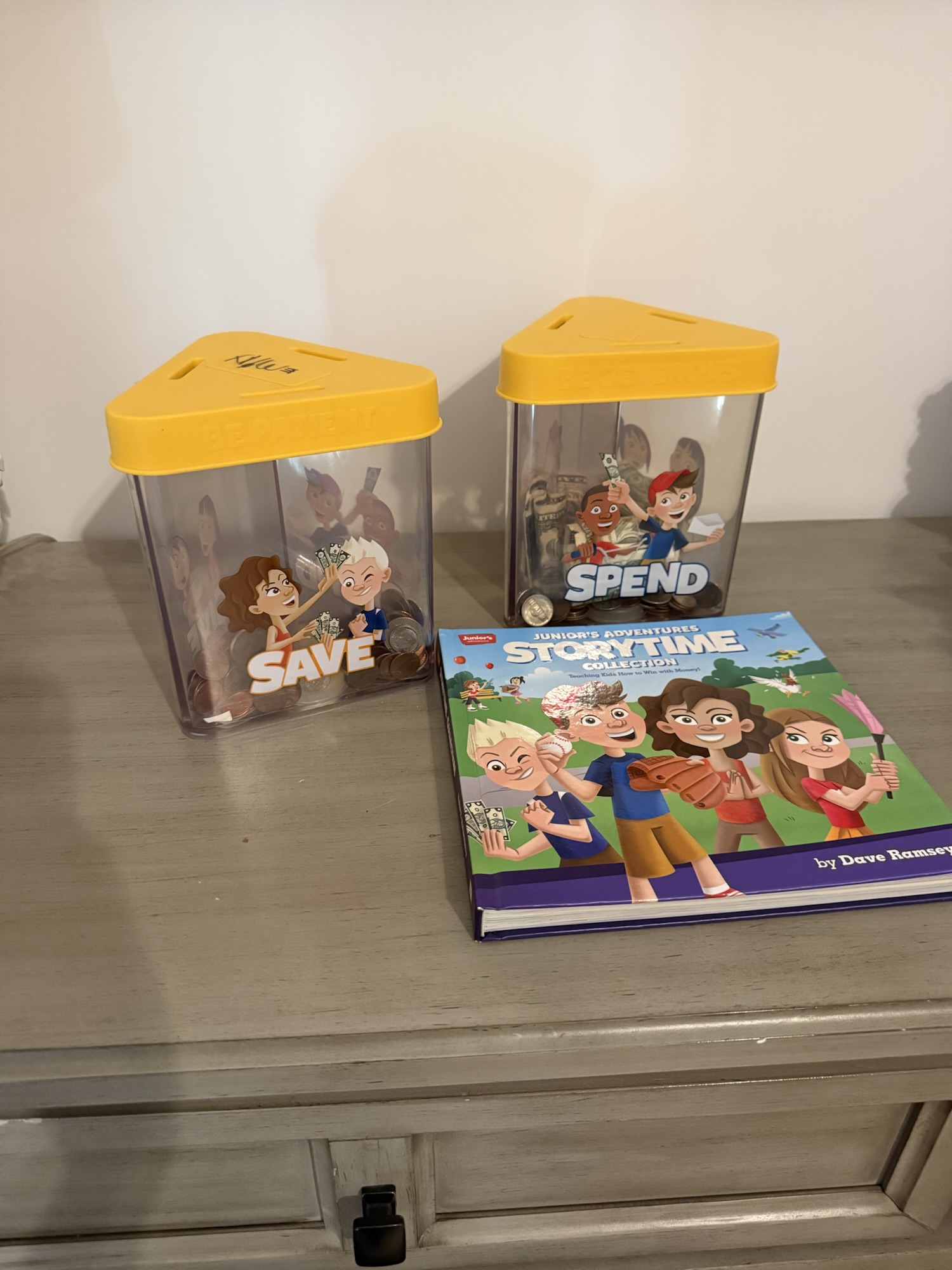
Over the years, we’ve created a system that combines chore charts, allowance, money-themed books, and Spend/Save/Give piggy banks to help teach these concepts in a way our kids can understand.
Today I’m sharing exactly what works for our family and the tools we use to help teach our kids about money, chores, saving, and giving.
Disclosure: This post contains Amazon Associate affiliate links. As an Amazon Associate, I earn from qualifying purchases at no additional cost to you. I only recommend products that I have personally used or genuinely believe will be helpful to families.
Our Chore Chart System
One of the biggest ways we teach our kids about money is through chores.
We keep these chore charts right on our refrigerator so they’re easy to see every day. The charts aren’t picture-perfect anymore, but that’s because they get used constantly. I’d much rather have a well-loved chore chart than a spotless one that nobody uses!

Each child has age-appropriate responsibilities that help them contribute to our home. Some of the chores on our charts include cleaning their room, making their bed, reading, doing laundry, helping with younger siblings, and other daily responsibilities.
For most chores, our kids earn a star worth about 25 cents. We keep the amount small because the goal isn’t to make a lot of money—it’s to help them understand the connection between work and earning.
Occasionally, we’ll increase the reward for bigger jobs. For example, if a bedroom has become a complete disaster zone and requires extra effort to clean, we might offer $1 for the task. The amount isn’t always the same, but we try to make sure the reward matches the amount of work involved.
One thing that has worked really well for our family is having a weekly payday on Sundays. Throughout the week, the kids earn stars for completing their chores, and then on Sunday they count up their stars and receive their money. This gives them something to work toward and helps them learn patience rather than expecting an immediate reward every time they complete a task.
More importantly, it gives us an opportunity to talk about what they’re going to do with the money they’ve earned.
Our Spend, Save, and Give System
Once our kids receive their money on payday, we use a simple Spend, Save, and Give system to help them learn how to manage it.
One thing I love about this system is that it teaches kids there are different purposes for money. Not every dollar needs to be spent right away, and not every dollar needs to be saved forever.

We encourage our kids to divide their money between three categories:
Spend
The spend category is exactly what it sounds like—money they can use for things they want right now. Whether it’s a small toy, a treat at the store, or something fun they’ve been wanting, this money is theirs to spend.
This category has been a great way for our kids to learn about making choices. Sometimes they decide to spend their money right away, and sometimes they realize they’d rather save it for something bigger.
Save
The save category helps teach delayed gratification, which can be a tough lesson for kids (and sometimes adults too!).
When our children have a bigger item they want, we encourage them to put money into their save jar each week and watch it grow over time. It’s been fun to see the excitement on their faces when they finally have enough money to purchase something they’ve worked toward.
Learning to save for a goal has helped them understand that not everything has to happen immediately.
Give
The give category helps our kids think beyond themselves and look for opportunities to help others.
Whether it’s donating to a cause, helping someone in need, supporting a fundraiser, or giving to our church, we want our children to understand that money can be used to bless other people too.
This has led to some really meaningful conversations about generosity and gratitude.
Why We Like This System
What I love most about the Spend, Save, and Give approach is that it keeps money simple and age-appropriate.
Our kids are learning that money has different purposes, that saving takes patience, and that giving can be just as rewarding as spending.
It’s not a perfect system, and we’re still learning as we go, but it’s been a great way to introduce money management in a way that makes sense for young kids.
One Unexpected Benefit
One unexpected benefit of this system is how it has changed our shopping trips.
Before we started using the Spend, Save, and Give jars, it was pretty common for my kids to ask me to buy things whenever we went to Target or the grocery store. Now, if there’s something they think they might want, they’ll often bring money from their Spend jar instead.
When they find something they like, we’ll talk about whether it’s worth spending their money on now or if they’d rather save it for something bigger later. Those conversations have become some of the best real-life money lessons because they’re learning that every purchase is a choice.
What has surprised me the most is that sometimes they decide not to buy anything at all. They’ll find something they want, think about a bigger goal they’re saving for, and choose to keep their money instead.
Giving them ownership over their own spending has helped them become more thoughtful shoppers while also giving them a little independence. Plus, it has significantly reduced the number of times I’m asked to buy random toys and treats during our shopping trips!
The Money Book We Read Together
In addition to our chore charts and Spend, Save, and Give jars, we’ve also found that books can be a great way to start conversations about money.
One of our favorite resources is this kids’ money book that teaches important financial concepts through simple stories that children can understand. Rather than just talking about money, the stories help bring these ideas to life in a way that feels fun and relatable.


The book covers topics like working hard, saving, spending wisely, avoiding debt, giving to others, and making good choices. I love that the lessons are presented through stories instead of lectures because it keeps kids engaged while still teaching valuable life skills.
After reading a story together, we often find ourselves having conversations about how those lessons apply to our own lives. Sometimes the kids will connect a story to their chore money, something they’re saving for, or a recent shopping trip.
As a parent, I appreciate having tools that help open the door to these conversations. Teaching kids about money can feel overwhelming, but books like this make it feel much more natural and age-appropriate.
While our chore charts and piggy banks give our kids hands-on experience with money, these stories help reinforce the lessons and give us opportunities to talk about topics like responsibility, patience, generosity, and hard work.
Final Thoughts
At the end of the day, our goal isn’t just to teach our kids how to count money. We want to help them understand the value of hard work, responsibility, patience, and gratitude.
My husband and I are both nurses, and one thing we’ve been able to share with our children is the connection between work and the things we enjoy as a family. Whether we’re planning a Disneyland trip, saving for a vacation, or making a large purchase, we often talk about how Mommy and Daddy worked extra shifts to help make those goals possible.
Those conversations have helped our kids see that many of the things we enjoy don’t just happen automatically. They come from planning, saving, and working hard toward a goal.
In the same way, we’re trying to teach our children that when they work hard, earn money, save for something special, and make thoughtful spending decisions, they’re building skills that will serve them for the rest of their lives.
Will they always make perfect choices with their money? Probably not—and honestly, neither do adults sometimes! But we hope that by starting these conversations early, we’re giving them a strong foundation for the future.
Teaching kids about money has been such a fun journey for our family. Through chore charts, payday, Spend-Save-Give jars, and money-themed books, we’ve found simple ways to make these lessons part of everyday life.
My hope is that these small lessons today will help our children become confident, responsible adults who know how to work hard, save for what matters, give generously, and make wise financial decisions in the future.
Shop Our Favorite Money-Teaching Tools
If you’re looking for simple ways to teach your kids about money, these are the tools our family uses and loves. They’ve helped us create meaningful conversations about hard work, saving, spending wisely, and giving to others.
Chore Charts & Supplies
The chore charts on our refrigerator have become a daily part of our routine and help our kids track responsibilities, earn money, and build good habits.
Spend, Save, and Give Piggy Banks
These piggy banks have been one of our favorite tools for teaching money management. They make it easy for kids to visualize where their money is going and help reinforce the concepts of spending, saving, and giving.
Money Books for Kids
Books have been a great way to introduce money concepts through stories and start conversations about responsibility, hard work, generosity, saving, and wise spending.
As an Amazon Associate, I earn from qualifying purchases. Thank you for supporting my blog!
One thing our kids love saving their money for is our family Disneyland trips. Having a savings goal makes it easier for them to understand why setting money aside matters. Whether they’re saving for a special souvenir, spending money for treats in the parks, or a future experience, it gives them a real-life reason to practice the money skills they’re learning at home.
If you’re planning a Disneyland vacation with kids, be sure to check out my favorite Disneyland tips and tricks for families and my review of Bibbidi Bobbidi Boutique to help make your trip even more magical.
Leave a Reply